


Gynaecological ultrasound
Gynaecological ultrasound is a non-invasive examination technique that, through the use of ultrasound, allows visualization of a woman’s internal genital organs.
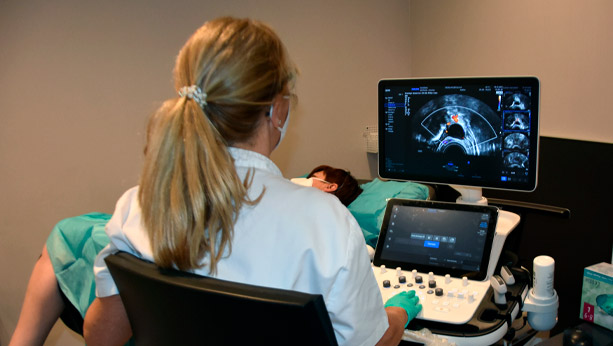
Ultrasound is a technique that uses high-frequency ultrasound waves (vibrations at a non-audible frequency) to obtain images of the inside of the body, as sound is reflected differently by different tissues.
In addition, thanks to the so-called “Doppler effect,” it provides information about the speed and movement of blood flow within blood vessels.
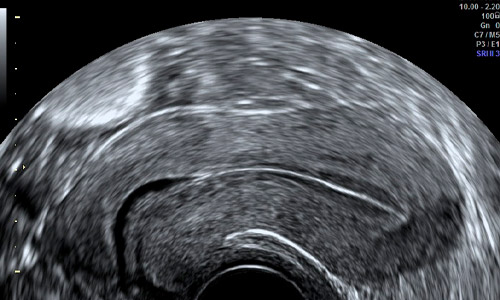
Ultrasound view of the uterus
Gynaecological ultrasound plays a fundamental role in the early detection of any type of gynaecological abnormality and, in particular, certain types of cancer such as ovarian cancer.
In ovarian cancer, early detection dramatically improves long-term survival, while also allowing the use of less aggressive and much more effective treatments.
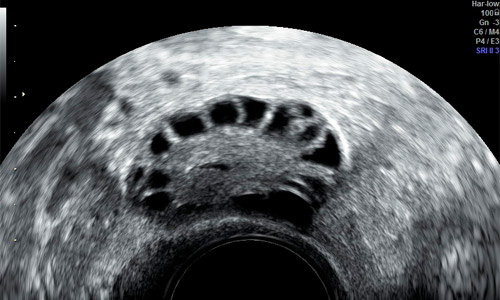
Ultrasound view of the ovary during reproductive age
How a gynaecological ultrasound is performed
Today, gynaecological ultrasound is a routine examination in gynaecology.
Ultrasound can be performed through different approaches, the most common being vaginal and abdominal.
Currently, most ultrasounds are performed vaginally, by inserting a small transducer into the vagina. This approach provides larger and clearer images of the ovaries and uterus than the abdominal method, as the probe is closer to the tissues.
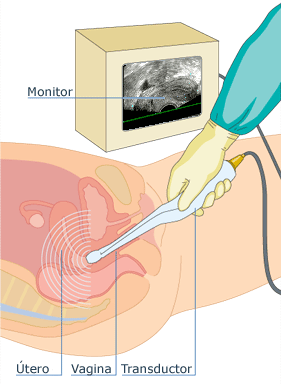
Transvaginal Ultrasound
The abdominal approach is only indicated for women who have not had sexual intercourse or in special cases where a proper evaluation cannot be performed vaginally.
Preparation
In general, the ultrasound can be performed at any time, although depending on the specific purpose of the study, it may be recommended to schedule it on certain days of the menstrual cycle.
For a transvaginal ultrasound, no special preparation is required.
For an abdominal ultrasound, it is necessary to drink one litre of water one hour before the test, as a full bladder helps obtain better images.
Patient Care Information
Most health insurance providers cover this test with prior authorization. When you request an appointment, you will be informed about your insurance coverage and the procedures to follow.
At our clinic, you can receive the test report on the same day as the examination.


